What is sleep() function/method in Python Programming?
In computer programming sleep is an inactive state for a period of time for execution of a process, task, or thread.
In Python programming sleep() function/method is used to suspend the execution of a program for the provided number of seconds as an input parameter.
Python Sleep Syntax:
time.sleep(time)
Parameter/Argument:  time -> Number of seconds for which the execution is to be suspended.

Return value: sleep function does not return any value back.
Sleep Python Code Examples:
Example 1: sleep() for 10 seconds
# Example 1: Sleep for 10 seconds after saying Hello world!

import time

print("Hello World, We will wait for 10 seconds before saying bye!")
time.sleep(5)
print("Program completed...")
Example 2: sleep() for 10 seconds
# Example 2: One-minute countdown using sleep()

print("60 minute countdown started!")

for x in range(60, 0, -1):
  time.sleep(1)
  print(x)

print("60 minute countdown completed!")
Example 3: Digital Clock using sleep():
import time
import os

while True:
  os.system('cls') # Clear Screen
  print(time.strftime("%I:%M:%S %p", time.localtime()))
  time.sleep(1)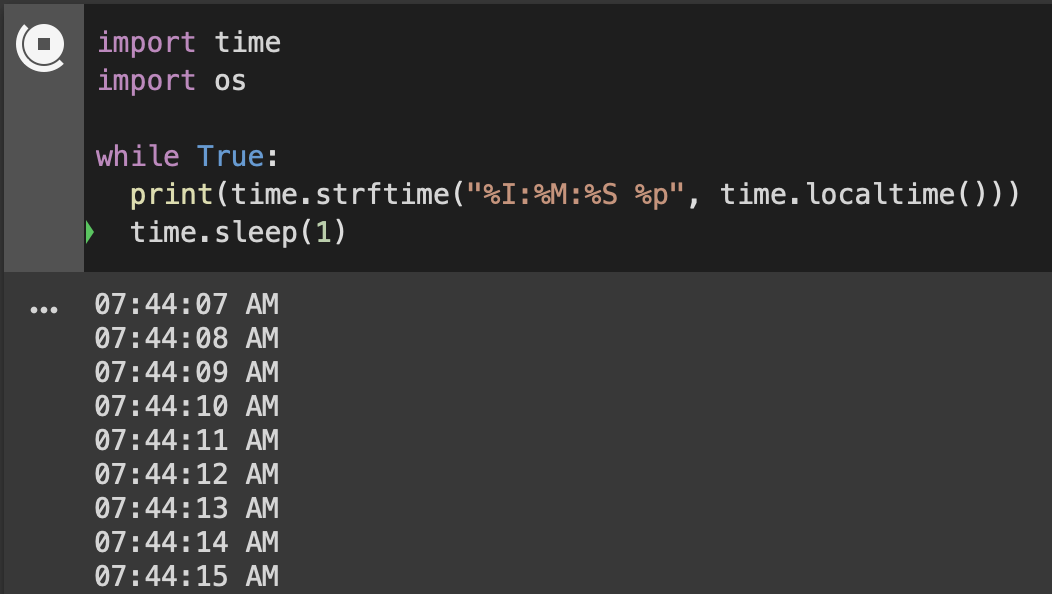

References:
sleep() function documentation: https://docs.python.org/3/library/time.html#time.sleep
Comments & Discussion
Facing issues? Have questions? Post them here! We're happy to help!